


Rose oil is a highly valued essential oil known for its rich floral fragrance and wide range of uses in beauty, wellness, and aromatherapy. When people search for how to make rose oil, they are usually interested in learning how the natural scent and beneficial compounds of rose petals can be extracted into a concentrated form. This oil is most commonly derived from varieties like Rosa damascena, which are prized for their strong aroma and high oil content. It is widely used in perfumes, skincare products, and natural healing remedies due to its soothing and refreshing qualities.
Beyond its fragrance, rose oil is also appreciated for its emotional and therapeutic benefits. It is often used in aromatherapy to help reduce stress, improve mood, and promote relaxation. In skincare, it is known for its ability to hydrate the skin, reduce redness, and support a healthy glow. Because of these versatile benefits, rose oil has become one of the most sought-after natural oils in the world, making the process of learning how to make rose oil popular among both hobbyists and professionals.
Best Roses for Oil Extraction
Choosing the right type of rose is one of the most important steps when learning how to make rose oil, because not all roses produce the same level of fragrance or oil content. The most commonly used variety for high-quality rose oil is Rosa damascena, also known as the Damask rose. This variety is famous for its strong aroma, rich petals, and high concentration of essential oils, making it the top choice for commercial and traditional extraction methods.
Another suitable variety is Rosa centifolia, often called the cabbage rose. It is widely used in perfumery due to its soft, sweet fragrance and balanced oil profile. These roses are usually harvested early in the morning when their oil content is at its peak. Freshness plays a major role in quality, as petals begin to lose their aromatic compounds quickly after being picked. That is why professional growers carefully time the harvest to ensure maximum oil yield and fragrance strength.
Steam Distillation Method
Steam distillation is the most widely used and reliable method when learning how to make rose oil, especially in commercial production. In this process, fresh rose petals are placed in a distillation unit where steam is passed through them. The heat from the steam gently releases the natural aromatic compounds found inside the petals without burning them, preserving the delicate fragrance of the rose.
Once the steam carries these volatile compounds, it moves into a cooling system where it condenses back into liquid form. This liquid contains both rose water and essential oil, which naturally separate due to differences in density. The rose oil floats on top and is carefully collected. This method is valued for producing high-quality oil with a pure and authentic scent, making it the standard technique in most industries that deal with essential oils.
Solvent Extraction Method
Solvent extraction is another important technique used in the process of how to make rose oil, especially when higher yields and stronger fragrance concentration are required. In this method, fresh rose petals are placed in a chemical solvent such as hexane, which helps dissolve the aromatic compounds present in the flowers. This process creates a thick, waxy substance known as “concrete,” which contains both essential oils and natural plant waxes.
After the concrete is formed, it undergoes further processing with alcohol to separate the pure aromatic oil from the waxes and other residues. The final product obtained from this method is known as “rose absolute,” which is highly concentrated and widely used in luxury perfumes. Although this method produces a stronger scent compared to steam distillation, it is not always considered a pure essential oil due to the use of chemical solvents during extraction.
Traditional Enfleurage Method
Enfleurage is one of the oldest and most traditional techniques used in learning how to make rose oil, and it was widely practiced in France before modern extraction methods were developed. In this process, fresh rose petals are carefully placed on a layer of odorless fat, which slowly absorbs the natural fragrance of the flowers over time. The petals are replaced repeatedly to ensure that the fat becomes fully saturated with the rose aroma.
This method is highly time-consuming but is known for preserving the most delicate and natural scent of roses. Once the fat is fully infused, it is washed with alcohol to separate the aromatic compounds, resulting in a highly fragrant product called rose absolute. Although enfleurage is rarely used today due to its labor-intensive nature, it is still valued in high-end perfumery for producing an extremely pure and soft floral scent.
Step-by-Step DIY Rose Oil at Home
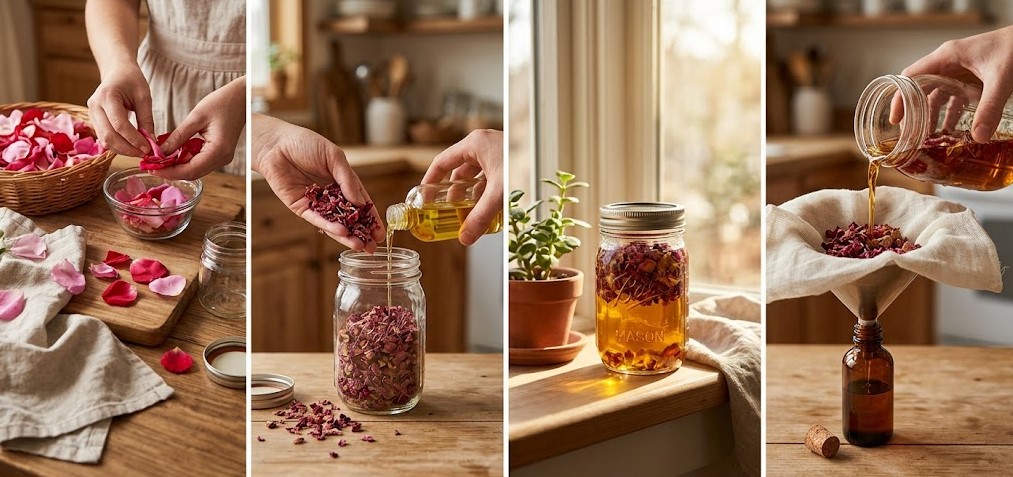
Making rose oil at home is a simple and natural approach for anyone exploring how to make rose oil without industrial equipment. While it may not produce the same concentrated essential oil as commercial methods, it still captures the gentle fragrance of roses in a usable form. The most common home method involves infusing fresh rose petals in a carrier oil like olive oil or jojoba oil.
To begin, fresh and clean rose petals are gently washed and dried to remove any dust or impurities. They are then placed in a glass jar and fully covered with the carrier oil. The jar is sealed tightly and left in a warm, sunny place for about one to two weeks, allowing the natural aroma of the roses to infuse into the oil. After the infusion period, the oil is strained to remove the petals, leaving behind a lightly scented rose-infused oil that can be used for skincare, massage, or aromatherapy.
Storage and Shelf Life
Proper storage is an essential part of learning how to make rose oil, because even high-quality oil can lose its fragrance and benefits if it is not stored correctly. Rose oil, whether homemade or commercially produced, should always be kept in a dark glass bottle to protect it from light exposure, which can break down its natural compounds over time. Keeping the bottle tightly sealed also helps prevent oxidation and contamination.
Temperature plays an equally important role in preserving the oil’s quality. Rose oil should be stored in a cool, dry place away from direct sunlight and heat sources. When stored properly, commercially extracted rose oil can last for several years, while homemade infused rose oil typically has a shorter shelf life of around 6 to 12 months. Regularly checking the aroma and clarity of the oil helps ensure it remains safe and effective for use.
Benefits and Uses of Rose Oil
Rose oil is highly valued not only for its fragrance but also for its wide range of therapeutic and cosmetic benefits, which is why many people search for how to make rose oil at home or professionally. In skincare, it is known for its hydrating and soothing properties, helping to reduce redness, calm irritation, and improve overall skin texture. Its natural antioxidants also support healthy and glowing skin, making it a common ingredient in premium beauty products.
Beyond skincare, rose oil is widely used in aromatherapy and emotional wellness. Its calming scent is believed to help reduce stress, ease anxiety, and promote better sleep. Many people use it in diffusers, massage oils, or bath routines to create a relaxing environment. It is also used in perfumery due to its rich, long-lasting floral aroma, making it one of the most important natural ingredients in the fragrance industry.
Conclusion
Learning how to make rose oil shows how a simple flower can be transformed into one of the most luxurious and beneficial natural extracts in the world. From traditional methods like enfleurage to modern techniques such as steam distillation and solvent extraction, each process captures the unique fragrance of roses in different ways. Even a simple home infusion method allows you to enjoy a mild version of rose oil for skincare and personal use.
Overall, rose oil is valued for its beauty, versatility, and therapeutic effects. Whether used in perfumes, skincare, or aromatherapy, it remains a timeless natural product with global importance. Understanding its extraction methods not only helps in making it at home but also gives a deeper appreciation of the craftsmanship behind this precious oil.
FAQs
1. Can I make rose oil at home easily?
Yes, you can make a simple infused rose oil at home using fresh petals and a carrier oil, though it will be less concentrated than commercial oil.
2. Which rose is best for rose oil?
Rosa damascena is considered the best variety due to its strong fragrance and high oil content.
3. How long does homemade rose oil last?
Homemade rose-infused oil usually lasts around 6–12 months if stored properly in a cool, dark place.
4. What is the main use of rose oil?
Rose oil is mainly used in skincare, perfumes, and aromatherapy for its fragrance and calming effects.
For More Latest Update genius.com.in
